Grass Court Tennis Betting Strategies and Statistics
 Available in US
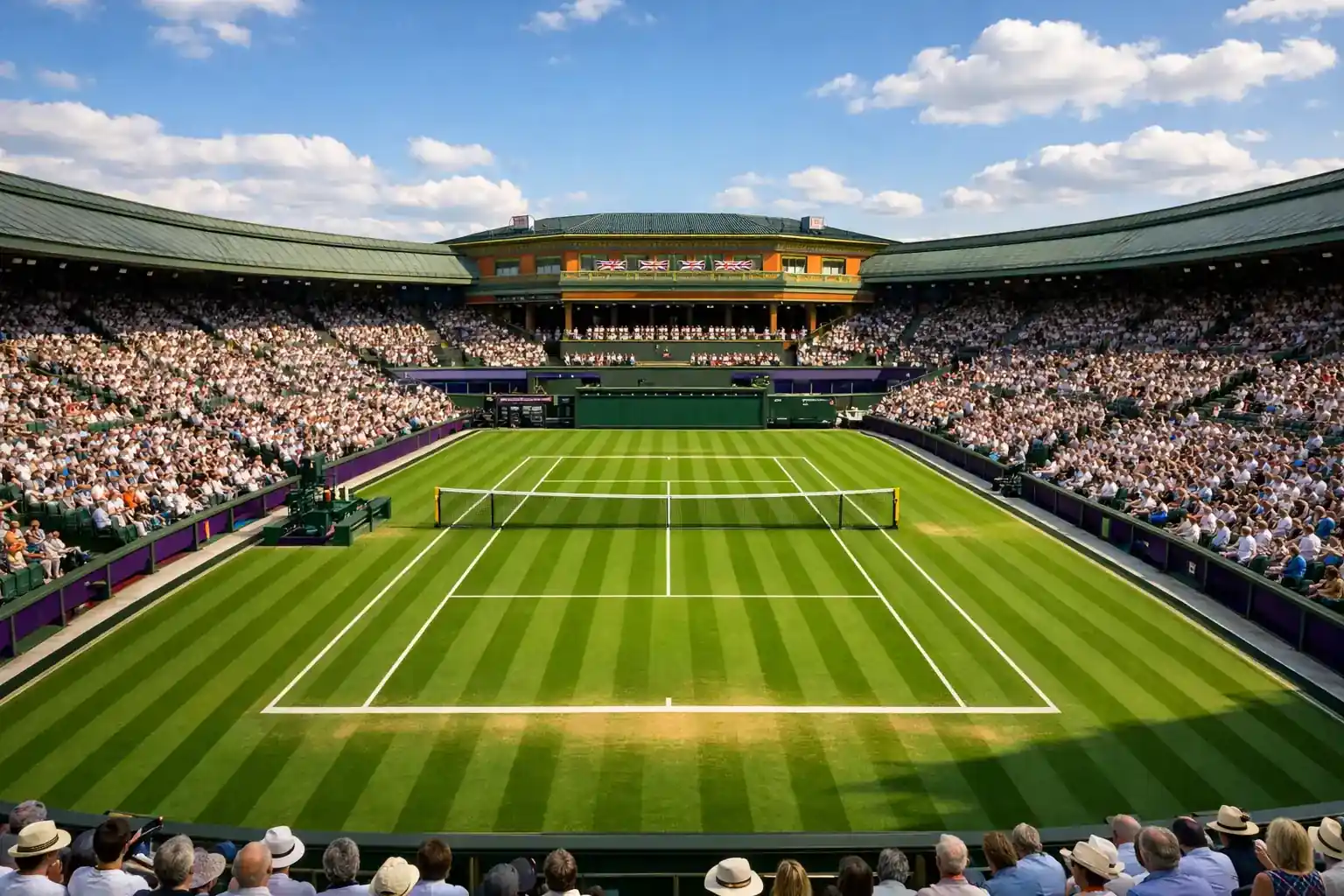
Grass court tennis exists in its own universe, operating by rules that contradict nearly everything bettors learn from watching matches on clay or hard courts throughout the rest of the year. The surface transforms the sport so fundamentally that players who dominate other parts of the calendar can become vulnerable underdogs on lawn, while relative unknowns with specific grass court skills suddenly become genuine title contenders. Understanding these transformations is not merely helpful for profitable grass court betting, it is absolutely essential.
The challenge for most bettors is that grass court tennis comprises such a small portion of the annual calendar that developing genuine expertise requires deliberate effort. The surface appears for roughly six weeks each summer, concentrated almost entirely in the United Kingdom, before disappearing until the following year. This brevity means that casual observations rarely accumulate into the deep understanding that profitable betting demands. You must study grass court dynamics specifically rather than assuming general tennis knowledge transfers directly.
What makes grass uniquely interesting from a betting perspective is how completely it reshuffles competitive hierarchies. The world number one on hard courts might struggle against a player ranked outside the top fifty who happens to possess the specific skills that grass rewards. These mismatches occur frequently enough to create systematic betting opportunities for those who recognise them before the markets do. The surface does not merely favour different players, it often inverts expectations entirely.
This guide examines grass court tennis through the lens of betting strategy, breaking down the surface’s physical characteristics and their implications for match outcomes. We explore which player types thrive on grass, how to interpret statistics differently for this surface, and where the most reliable betting edges exist. Whether you focus on Wimbledon exclusively or bet the entire grass court swing, these frameworks will sharpen your approach to the fastest surface in professional tennis.
Grass Court Physics and Betting Impacts
The physical behaviour of tennis balls on grass creates conditions so distinct that players must fundamentally alter their games to succeed. Understanding these physics helps you anticipate match dynamics and identify betting value before it becomes obvious to the broader market.
Grass courts produce a low bounce that consistently surprises players accustomed to other surfaces. The ball skids through rather than kicking up, giving players less time to prepare their strokes and reducing the effectiveness of heavy topspin that relies on high bounces for its potency. This characteristic alone explains why baseline grinders who excel on clay often struggle terribly on grass while flatter hitters find their games suddenly more effective.
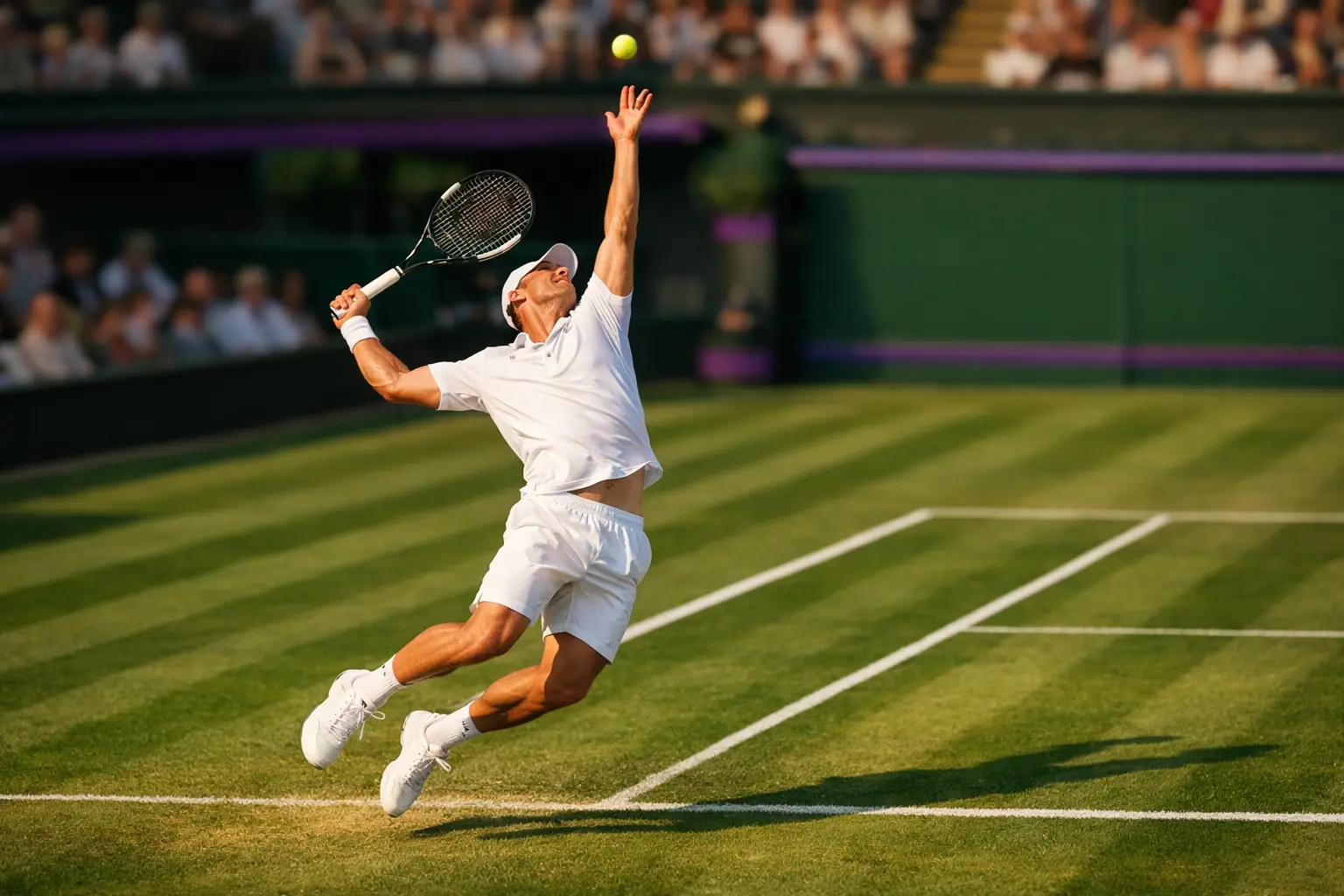
The speed of grass courts amplifies serving advantages beyond what any other surface provides. First serves penetrate the court before returners can fully set their positions, making clean returns substantially more difficult than on slower surfaces. A serve that produces comfortable returns on hard courts becomes nearly unreturnable on grass because the ball reaches the returner before their preparation completes. This physics-driven serve advantage shapes every aspect of grass court betting strategy.
Court conditions on grass change throughout tournaments in ways that other surfaces do not replicate. Fresh grass at the start of events plays faster and produces more irregular bounces than worn grass in later rounds. The areas around the baseline deteriorate most rapidly, creating patches where the ball behaves unpredictably. These evolving conditions mean that early-round matches play differently than finals, and players who adapted to fresh grass conditions must readapt as the surface transforms.
Weather affects grass court behaviour more dramatically than other surfaces. Moisture from overnight dew or passing showers changes how the ball grips the court, typically slowing conditions and producing higher bounces temporarily. Players who perform better on slightly slower grass can benefit from morning scheduling when moisture remains, while those who thrive on the fastest conditions prefer afternoon matches when the sun has dried the courts. These timing effects create micro-edges that attentive bettors can exploit.
The slippery footing on grass introduces physical risks absent from other surfaces. Players slip more frequently, sometimes falling during crucial points and occasionally sustaining injuries that affect match outcomes. Bettors should recognise that grass court matches contain inherent unpredictability from these physical hazards. A turned ankle or tweaked muscle can transform a match favouring one player into an entirely different contest.

Player Archetypes That Dominate Grass
Identifying which players possess grass court games before the markets fully recognise their advantages creates consistent betting value throughout the summer season. Certain playing styles translate beautifully to lawn while others struggle regardless of how dominant those players might be on other surfaces.
Big servers gain their largest advantages on grass because the surface maximises the value of pace and placement while minimising the effectiveness of defensive returns. Players who win high percentages of first serve points on hard courts become even more dominant on grass because the surface amplifies their existing advantages. When analysing grass court matches, weighting serve statistics more heavily than on other surfaces consistently improves prediction accuracy.
The serve-and-volley style that has largely disappeared from modern tennis retains viability on grass. Players comfortable approaching the net behind their serves can finish points before opponents establish defensive positions. Volleys that would be passed on slower surfaces become winners on grass because the ball reaches the net player faster than passing shot attempts arrive. Identifying players with genuine net skills provides betting edges because the modern game has de-emphasised these abilities to the point where many bettors overlook them entirely.
Flat hitters who drive through the ball rather than generating heavy topspin find grass suits their games perfectly. The low bounce reduces the effectiveness of topspin while rewarding shots that skid through the court. Players whose groundstrokes looked ordinary on clay suddenly become dangerous on grass because their natural shot characteristics match what the surface rewards. Recognising these stylistic fits before the market does creates value on players whose grass court potential exceeds their ranking would suggest.
Conversely, clay court specialists who rely on heavy topspin and extended rallies frequently struggle on grass despite their success elsewhere. Their favourite weapons lose potency on the faster surface while their movement patterns, optimised for the predictable footing of clay, become liabilities on slippery grass. Fading these players at shorter prices than their rankings would typically justify often provides value because the markets underestimate how dramatically surface affects certain playing styles.
Movement patterns differ on grass in ways that advantage some players over others. Quick first steps matter more than sustained running speed because points end before extended rallies develop. Players who excel at explosive lateral movements often outperform those with better overall court coverage because grass court tennis rewards the ability to reach the first ball rather than the ability to sustain defensive positioning through long rallies.

Statistical Patterns on Grass Courts
Data analysis for grass court tennis requires recalibrating the statistical frameworks that work effectively on other surfaces. Certain metrics become more predictive while others lose their value, and understanding these shifts improves betting decisions substantially.
First serve percentage takes on enhanced importance because the surface rewards getting first serves into play. Players who struggle with first serve consistency face compounding problems on grass because their second serves become more attackable on the faster surface. When comparing two players for a grass court match, the one with higher first serve percentage typically gains a larger advantage than the same difference would provide on hard courts or clay.
Ace counts on grass regularly exceed what the same players produce on other surfaces, but this inflation varies by player. Big servers might see their ace counts double on grass while smaller servers experience more modest increases. Comparing a player’s grass court ace production to their hard court baseline reveals how effectively their serve translates to the faster surface. Those whose grass court numbers increase most dramatically often provide betting value because the market prices based on overall statistics rather than surface-specific adjustments.
Break point conversion rates typically decline on grass because the serve advantages make breaks harder to achieve. A player who converts sixty percent of break points on clay might manage only forty percent on grass without any decline in their actual return quality. Recognising this surface-driven reduction helps you interpret grass court results more accurately. A player who struggled to convert break points on grass might have actually returned well relative to surface expectations even if raw conversion percentages look disappointing.
Tiebreak frequency on grass exceeds all other surfaces by substantial margins. Matches between two strong servers routinely produce tiebreaks in most or all sets because neither player can break serve consistently. This pattern has direct betting implications for set betting and games totals markets. Expecting tiebreaks changes the probability distribution for final scores in ways that create betting value when markets underestimate this tendency.
Head-to-head records require surface filtering to provide useful information for grass court matches. Overall head-to-head statistics that aggregate results from all surfaces can mislead dramatically when one player’s style suits grass while the other struggles on fast courts. Two players might have met eight times with one completely dominant, yet their grass court match could produce entirely different dynamics if the dominant player’s edge came from surface-specific advantages that disappear on lawn.

Transitioning from Clay to Grass
The calendar positions the grass court season immediately after the clay court swing, creating transition challenges that affect betting outcomes throughout June and July. Players handle this surface switch with varying degrees of success, and identifying who adapts smoothly versus who struggles provides consistent betting edges.
Physical adaptation to grass requires changing movement patterns developed over months of clay court competition. The sliding footwork that enables defensive excellence on clay becomes a liability on slippery grass where the same movements risk injury. Players must consciously override ingrained habits to move safely and effectively on lawn, and this adjustment happens at different speeds for different individuals.
Technical adaptations prove equally challenging. Contact points that produce reliable shots on clay create problems on grass where the lower bounce changes ball heights at the moment of impact. Players who hit with extreme western grips often struggle more than those with more neutral grips because their technique assumes bounce heights that grass does not provide. Observing grip styles and noting which players struggled with grass adaptation in previous years helps predict who will handle the transition smoothly.
Mental adaptation matters more than many bettors recognise. Players accustomed to constructing points through extended rallies must accept that grass court tennis rewards aggression and risk-taking. Some players embrace this shift readily while others never become comfortable with the surface’s demands. The mental willingness to attack plays out in shot selection and point construction in ways that affect match outcomes independently of pure technical ability.
The time between Roland Garros and the first grass court events provides limited adaptation opportunity. Players must choose between rest after the demanding clay season and practice to accelerate their grass court transition. Those who prioritise rest might arrive fresher but less adapted, while those who practise extensively might arrive well-adapted but physically compromised. Neither approach is definitively superior, but understanding each player’s choices helps interpret early grass court results more accurately.
Early grass court tournaments reveal adaptation levels that inform later betting decisions. A player who struggles in their first grass match of the year but shows technical adjustments by their second match is adapting normally. A player whose grass court problems persist across multiple matches might face fundamental issues that will affect their entire summer season. Distinguishing between temporary adaptation struggles and genuine surface limitations improves predictions for later tournaments including Wimbledon.
To apply these surface-specific tactics effectively, you should familiarize yourself with the complete UK tennis tournaments calendar leading up to the major events.
Enhance your in-play betting performance by following the live updates featured on English Tennis every single day.

Over/Under and Handicap Strategies for Grass
Games totals and handicap betting on grass require specific adjustments because the surface produces scoring patterns that differ markedly from other courts. Applying hard court expectations to grass court markets produces systematic errors that cost money across the season.
Totals lines for grass court matches should anchor around tiebreak expectations rather than break expectations. A best-of-three-set match between two strong servers might reasonably be expected to produce twenty-four to twenty-six games if most sets go to tiebreaks. This baseline differs substantially from hard court expectations where more frequent breaks typically produce set scores with fewer games. Recognising this baseline shift helps identify when totals lines offer value on grass.
The over/under calculation changes when serve strength disparities exist. When one player possesses a dominant serve while the other serves more modestly, breaks become more likely in one direction than the other. This asymmetry can produce matches with fewer total games than the tiebreak baseline would suggest because one player wins sets with service breaks rather than tiebreaks. Adjusting totals expectations based on serve disparity improves betting accuracy.
Handicap betting on grass demands caution with large spreads. The serve dominance characteristic of grass courts means that even lopsided quality matchups often produce closer games margins than the same matchup would on slower surfaces. A player who might win by eight games on clay could win by only four on grass because their opponent’s serve holds through sets even when their game cannot otherwise compete. This compression of margins makes large grass court handicaps risky regardless of apparent quality differences.
Live betting on totals and handicaps offers particular opportunity on grass because the surface produces matches where momentum swings dramatically. A player who loses serve early in a set might still win the set in a tiebreak, creating opportunities to back unders if the initial break created an over adjustment that ignored the likely trajectory back to parity. Understanding grass court match dynamics helps identify these in-play value situations.
Live Betting on Grass Court Matches
In-play betting on grass rewards different analytical skills than live betting on other surfaces. The unique dynamics of grass court tennis create specific patterns that savvy bettors can recognise and exploit as matches unfold.
Serve rhythm development occurs throughout grass court matches as players find their timing on the faster surface. Early service struggles often correct themselves as players settle into match conditions, meaning that a slow start from a strong server might represent opportunity rather than concern. Backing established grass court players after early breaks against them sometimes provides value because the market overreacts to temporary adaptation issues.
Momentum on grass can shift more abruptly than on other surfaces because the serve dominance means that a single break can transform match dynamics entirely. A player who breaks serve on grass gains an advantage that feels larger than the equivalent break on clay because returning that break is statistically less likely. These momentum shifts create live betting opportunities when markets adjust too slowly or too aggressively to in-match developments.
Fatigue affects grass court matches differently because the shorter points produce less cumulative physical strain than clay court marathons. However, the explosive movements required for effective grass court tennis can produce sudden muscle issues that hard court rallies would not trigger. Watching player movement patterns during matches helps identify when fatigue or physical problems might affect outcomes in ways the live markets have not yet recognised.
Set betting markets during grass court matches reward understanding of tiebreak probabilities. When two strong servers approach a tiebreak at one set all, the probability distribution for final set scores shifts in ways that create value opportunities. Players who perform well in tiebreaks gain edges that straightforward win probability calculations might underestimate, making set betting markets attractive when you can identify tiebreak proficiency advantages.
Weather interruptions on grass create live betting situations that occur rarely on other surfaces. Rain delays can affect player rhythm and focus in ways that shift match dynamics when play resumes. Some players handle interruptions well while others struggle to regain their level after extended breaks. Tracking how specific players have performed after grass court rain delays provides an information edge when live betting after weather-affected matches resume.

Conclusion
Grass court tennis betting rewards those who approach the surface as a distinct discipline rather than a minor variation on standard tennis wagering. The physical characteristics of lawn courts transform the sport so completely that general tennis expertise provides only a foundation for the specific knowledge that profitable grass betting requires.
The serve dominance of grass courts represents the central reality that all betting strategy must acknowledge. Markets that underestimate how dramatically grass enhances serving advantages consistently misprice matches, creating value for bettors who recognise the surface effects that casual observers miss. When in doubt about a grass court match, weight serve statistics more heavily than you would for any other surface.
Player adaptation to grass varies enormously in ways that rankings fail to capture. Some players possess grass court games that exceed their overall ranking, while others struggle on lawn despite impressive results elsewhere. Identifying these surface specialists before they demonstrate their abilities publicly provides the kind of information edge that translates into betting profits.
Statistical interpretation on grass requires recalibrating expectations developed from other surfaces. Tiebreaks occur more frequently, breaks happen less frequently, and matches often produce scoring patterns that would seem anomalous on hard courts or clay. Applying grass-specific statistical baselines rather than general tennis expectations improves prediction accuracy throughout the summer season.
The concentrated grass court calendar creates opportunities for bettors who track the entire season rather than dropping in for Wimbledon alone. Form lines established at Queen’s and Eastbourne carry forward to The Championships with meaningful predictive value. Understanding how the grass court swing connects helps you interpret Wimbledon results more accurately and find value that isolated tournament analysis would miss.
Grass court betting is not more difficult than betting other surfaces, but it is different in ways that punish those who ignore its unique characteristics. The frameworks outlined here provide structure for approaching the grass season strategically, though successful implementation requires ongoing attention to the specific patterns each summer reveals. Those who invest the effort to understand grass court tennis deeply will find the surface provides reliable betting value throughout its brief but fascinating annual appearance.
Created by the "English Tennis" editorial team.